
Our mission
Make nature
worth more.
O.N.E. Amazon is building the data and financial infrastructure to make nature’s value visible and reward the people who protect it.
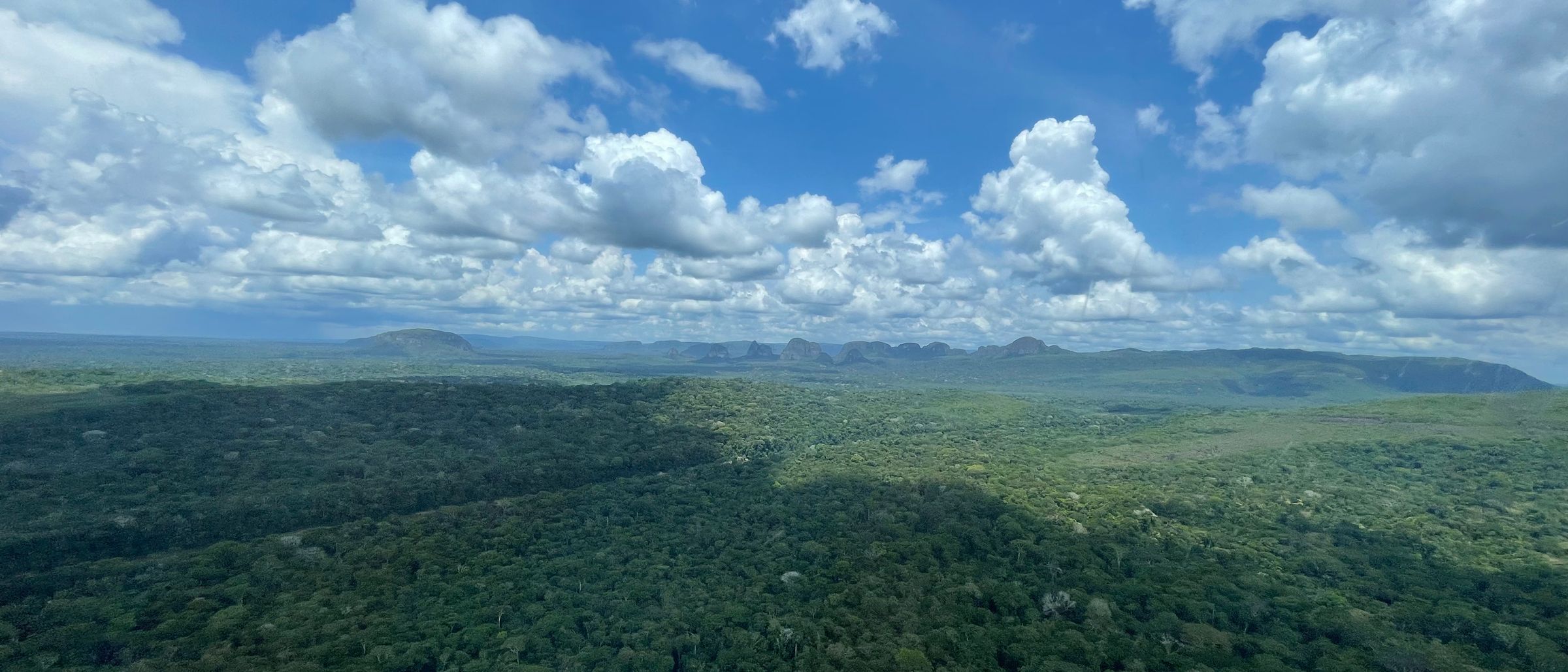
[01] A different equation
A standing forest should be worth more than a cleared one.
Nature works.
Our systems should, too.
Forests store carbon, regulate water, and sustain biodiversity. These living systems underpin communities and economies.
The challenge is to connect those functions with evidence that enterprise can use and incentives that support their protection over time.
Understand
what is there.
Bring observations from the forest floor together with the view from space.
Prove what
is protected.
Connect environmental observations to a defined place, time, and agreement.
Reward lasting
conservation.
Build commercial and financial models designed to support conservation for the long term.
Forest loss / 1986 to 2023
Cleared land
keeps spreading.
More than 88 million hectares, 12.5% of the Amazon’s forest cover. Satellite maps of the whole region, across eight countries and French Guiana, show forest giving way to pasture, crops, mines and towns.
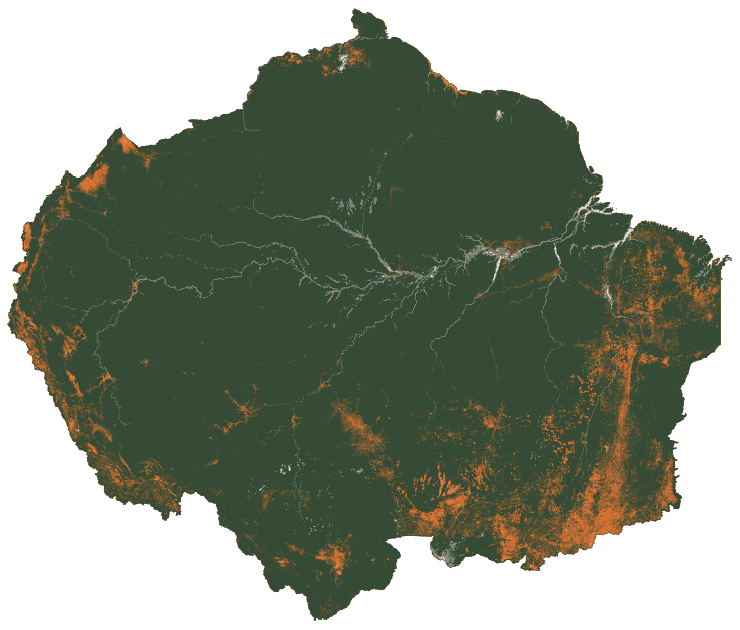
6% 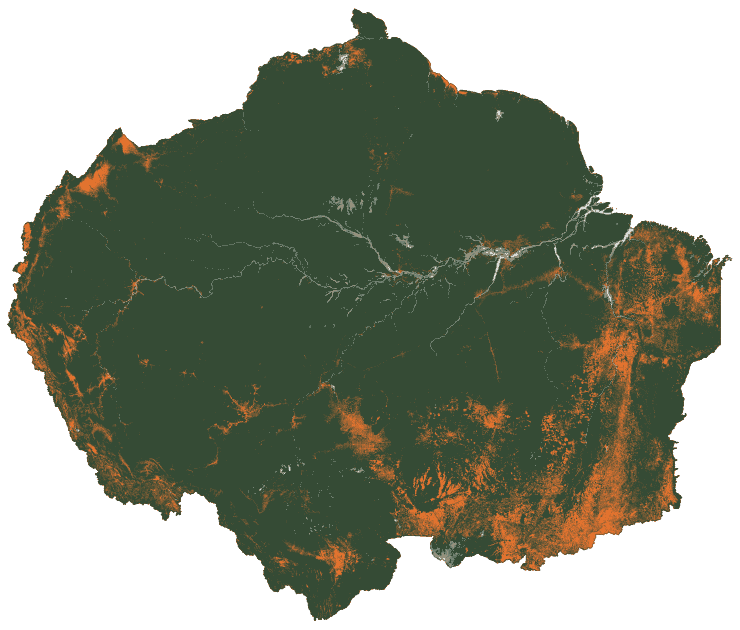
8% 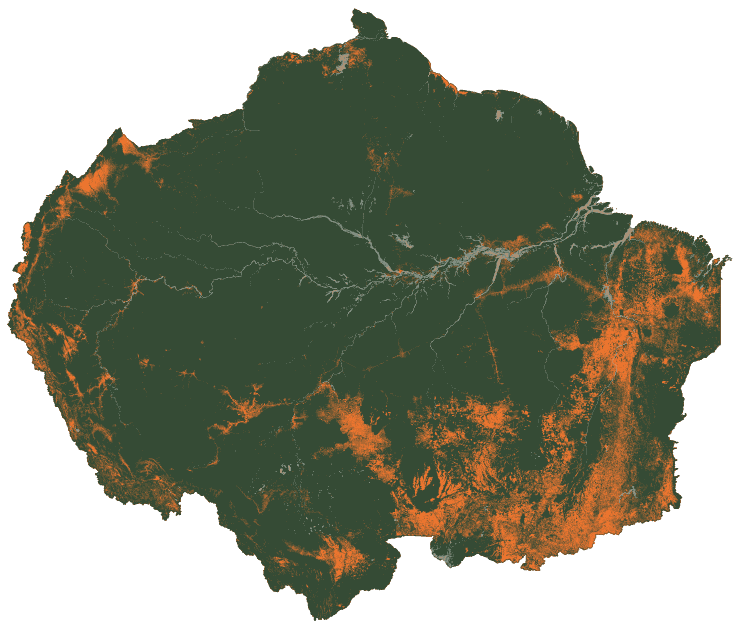
10% 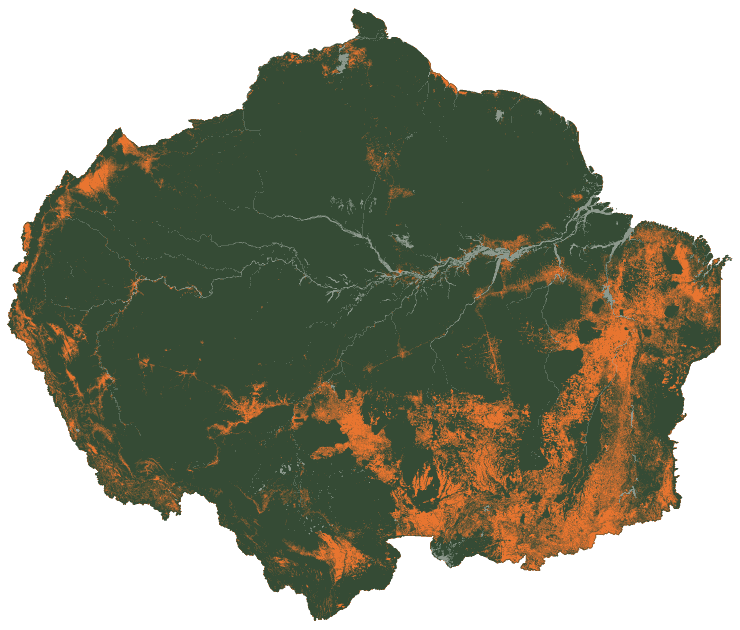
13% 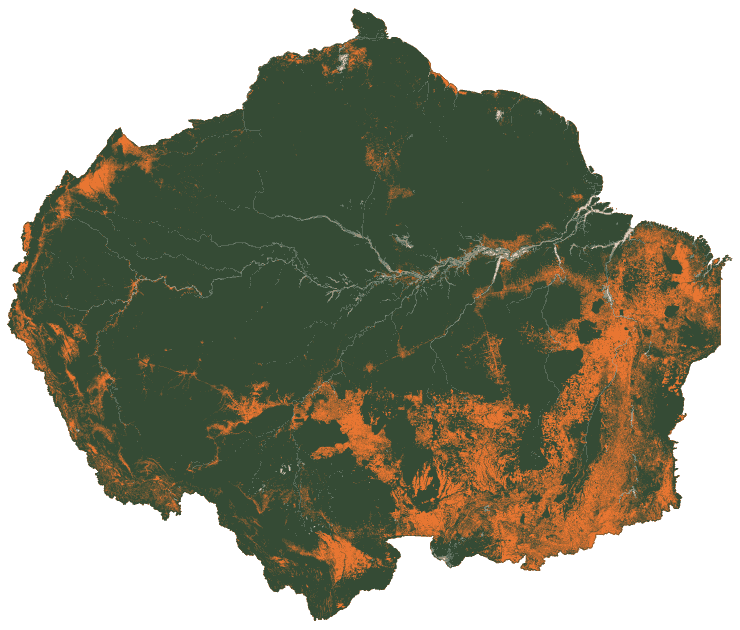
14% 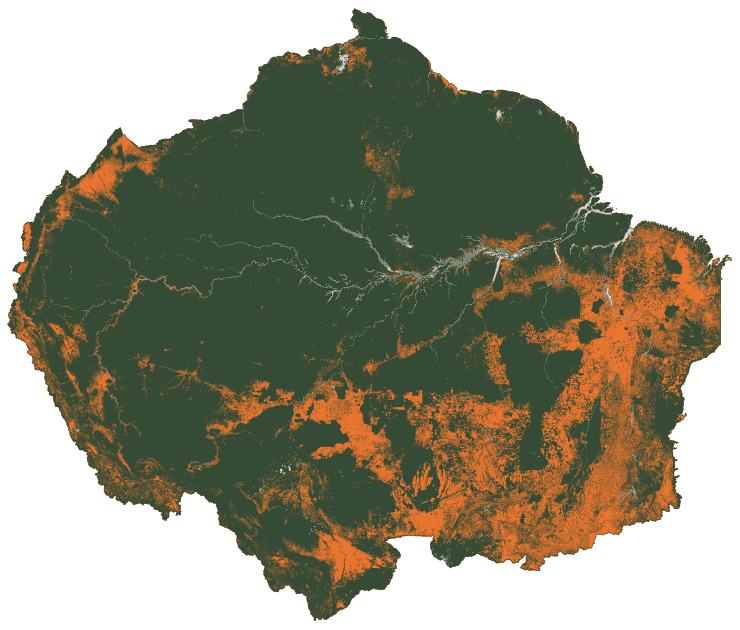
17%
Maps: O.N.E. Amazon, drawn from the MapBiomas Amazonía Collection 6 annual land cover and land use maps (RAISG), licensed CC BY-SA 4.0 and recolored for this site. The region is the Amazon as RAISG defines it, 8.47 million km². Cleared share: land in pasture, crops, plantations, mining and towns as a share of all land, calculated by O.N.E. Amazon. Forest lost from 1985 to 2023: MapBiomas Amazonía (2024).
The Amazon in numbers
What a standing
forest does.
More than half of world GDP depends on nature. Almost none of the work a living forest does shows up on a balance sheet.
Liters of water returned to the air by one hectare of Amazon forest on an average day.
Tonnes of carbon stored in the Amazon’s soils and vegetation.
Tree species, among an estimated 390 billion trees.
Estimated minimum yearly value of the Brazilian Amazon kept as forest, up to seven times the private value of extensive agriculture, logging and mining.
Water: Baker et al., Hydrology and Earth System Sciences (2021), about 1,080 mm a year across the Amazon basin. Carbon: Science Panel for the Amazon, Amazon Assessment Report (2021). Trees and species: ter Steege et al., Science (2013). Value: World Bank, Brazil Amazonian States Economic Memorandum (2023). World GDP: World Economic Forum with PwC, Nature Risk Rising (2020). Figures are third-party estimates, rounded. They describe the Amazon and nature as a whole, not O.N.E. Amazon’s programs.
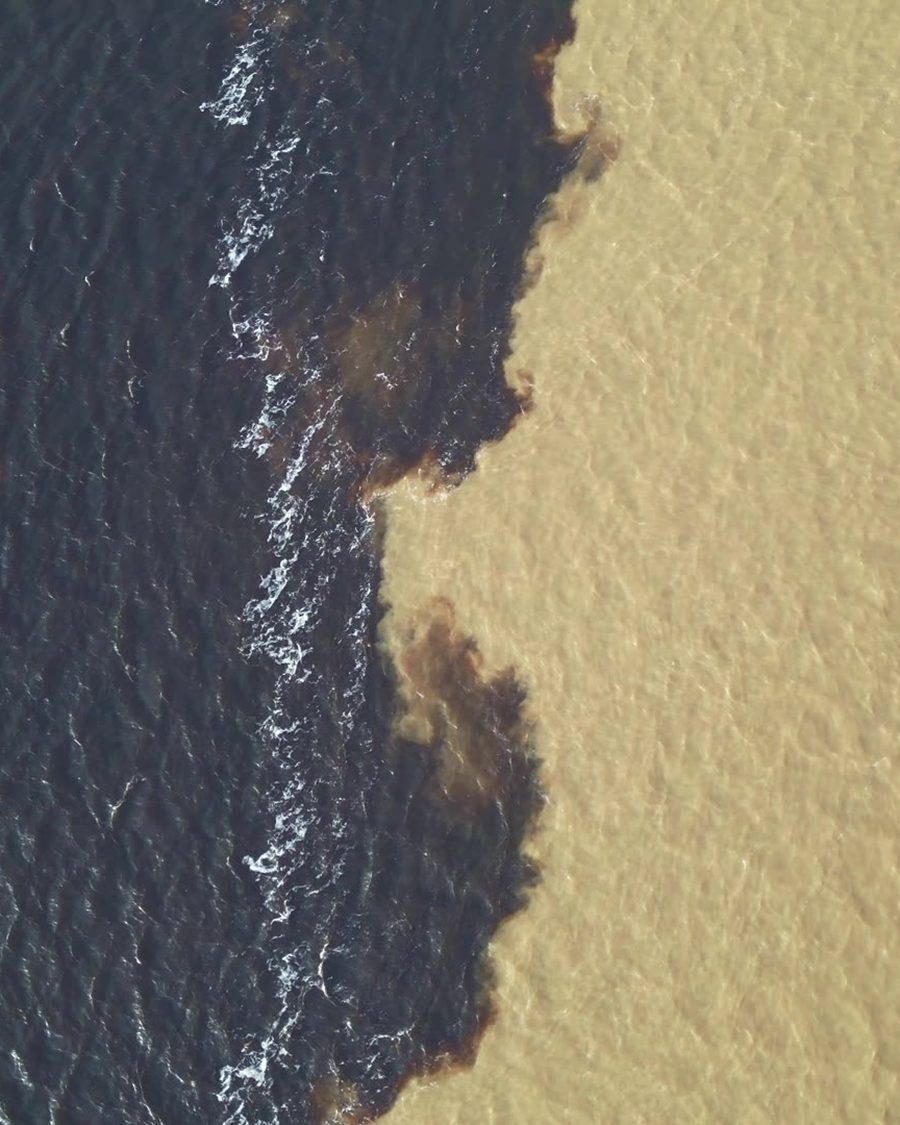
Water / The Meeting of the Waters near Manaus, Brazil, where the dark Rio Negro meets the sediment-rich Solimões
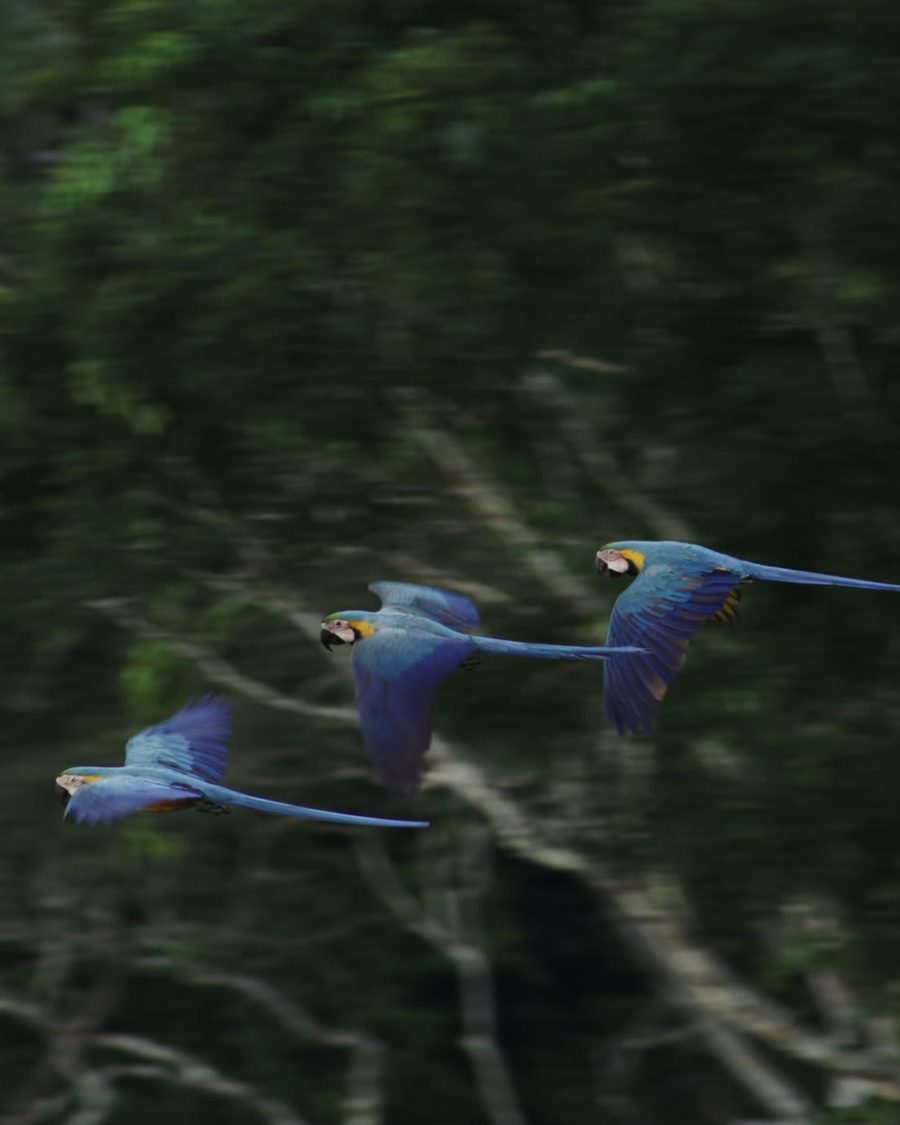
Biodiversity / Blue-and-yellow macaws in flight over the forest, Brazil
The people
are part of
the system.
Conservation lasts when the people protecting nature can share in its value.
Our program design brings together local rights, skilled field work, country control of data, and payments linked to verified conservation.